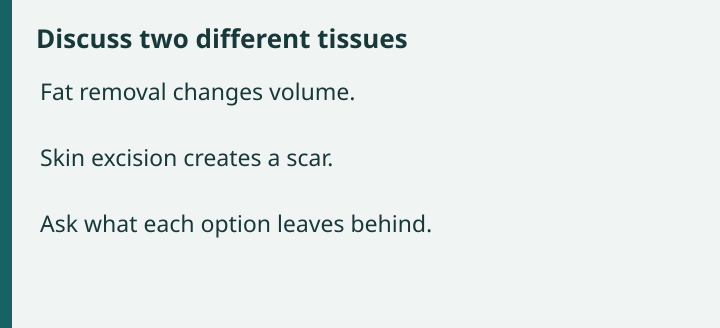
Arm liposuction reduces localized upper-arm fat. When hanging skin is the main concern, an arm lift may be more appropriate because removing fat alone does not remove that skin.
Fat and loose skin need different plans
The surgeon should assess the upper arm with attention to skin elasticity, fat distribution and the contour on both sides. Some people have localized fullness with relatively firm skin; others have folds after weight loss or aging. Those situations should not receive the same recommendation.
An arm lift removes excess skin and may remove fat, with a longer scar than liposuction. Ask to see the proposed scar location and understand what the trade-off means in sleeveless clothing. Exercise can improve muscle tone but cannot reliably eliminate skin that has lost elasticity, as ISAPS explains in its arm-lift guidance.
Agree the boundaries and expected shape
Clarify whether the plan covers the back of the upper arm only or also adjacent fullness near the armpit. Ask how the surgeon will preserve a smooth transition near the elbow and shoulder. A reduction in fat does not guarantee a specific arm circumference or a particular appearance in every pose.
Discuss incision placement, anesthesia and whether the surgeon recommends liposuction alone, a lift, or a staged approach. Avoid assuming that a skin-tightening device makes surgical skin removal unnecessary; ask what degree of improvement is realistic for your skin.
Plan daily tasks during recovery
Upper-arm treatment can affect dressing, hair care, carrying bags and reaching overhead. Before surgery, ask which activities you should limit and whether assistance at your accommodation would help. Garment instructions should explain fit, wear schedule and whom to contact if it causes concerning pressure or discomfort.
Swelling and temporary changes in sensation can occur. More serious concerns include infection, persistent sensory change, fluid collections and contour unevenness. Additional skin surgery introduces its own wound-healing and scar considerations. Follow-up should assess both the wound and how the arm contour settles.
Compare costs and international arrangements
Confirm that the quote covers both arms, any adjacent areas, anesthesia, garments and scheduled appointments. If a lift is advised, compare the full operation and aftercare rather than the liposuction fee alone. Ask what correction policy applies if contour irregularity persists.
When planning a visit to Korea, avoid building the itinerary around carrying heavy luggage immediately afterward. Agree a safe return journey with the surgical team, obtain written aftercare instructions and identify a clinician who can review a problem after you return home.
Explore relevant clinics
These profiles list the relevant treatment in clinic-published materials. Confirm the exact service and clinician directly.
How do you choose between arm liposuction and an arm lift?
The key distinction is whether the main concern is localized fat or excess hanging skin. An arm lift removes skin and involves a different scar and recovery plan; fat removal alone does not remove hanging skin.
Would upper-arm liposuction address the change you want?
Before deciding on upper-arm liposuction, describe the movement or shape that bothers you. A fold of loose skin and a localized pocket of fat may look similar in a photograph. Removing fat does not reliably tighten substantial loose skin. A consultation should establish what contributes to the shape and whether the trade-offs of changing it fit your goals.
What a sleeve can tell your surgeon
Bring a description of one everyday situation in which the shape matters. Does a narrow sleeve pull around the upper arm? Is it the outline when your arms hang still or the movement when you reach overhead? Those are different priorities. Explain what you would consider a worthwhile change even if there were still some softness or a visible fold. Avoid assigning a diagnosis from a home pinch test.
Compare the trade-offs
ISAPS explains that removing fat where skin has little elasticity can make looseness more visible. Removing excess skin involves an incision and a scar. Ask to see where that scar would lie with the arm down and raised, and which part of the arm a proposed operation would actually change. If avoiding an additional scar is more important to you than correcting looseness, say so before discussing an operation date.
Which past scars should I show at an arm consultation?
If an old piercing, vaccination site, injury or operation left a raised scar, show it to the surgeon before you compare arm liposuction with skin removal. Explain where the original wound ended, whether the scar grew beyond it and whether it continued to itch or enlarge months later. A photograph taken earlier can help show the change. A raised mark alone does not establish that you have a keloid. Tell the surgeon if a clinician diagnosed one or a close blood relative develops them.
Ask the surgeon to mark the proposed access points or longer incision on a drawing, then identify the scar you would find hardest to accept. Someone who wants less tissue catching in a sleeve may feel differently about a long arm scar from someone whose main concern is how the arm looks uncovered. A shorter incision still creates a wound. No drawing or example photograph can predict how your own scar will mature.
If you proceed, ask what your surgeon would want to hear about after the incision closes, who can examine a gradually thickening scar at home, and how to share the operative record with that person. Arrange suitable wound and scar advice with the treating clinician before buying silicone or compression products.
Ask the surgeon to describe what would likely remain with liposuction alone, with an operation that removes skin, and if you leave the area alone. Have them explain why one option is unsuitable if they reject it. Bring up previous arm or breast procedures, scarring concerns and whether both sides trouble you equally. A clinic listing for body contouring does not establish that a specific clinician performs every arm operation.
What to take home
Write down the area assessed, the expected limit, the likely scar location if relevant, and how lifting and reaching might be affected during recovery. If the answer depends on an in-person examination in Korea, leave that line open. A clear list of unknowns is more valuable than a deposit on a procedure whose main trade-off you have yet to see.
Start by describing the arm you live with
Does the concern show up mainly when you are photographed from the side, when you wave, or when a shirt fits your shoulders but pulls around your upper arm? These descriptions can sound trivial, yet they give the surgeon a clearer starting point than a request for a certain circumference. Tell the clinician if your priorities differ between arms, or if you are as concerned about how a result feels as how it looks. If you would be satisfied with improved comfort in clothing despite a remaining fold, say that. If visible scarring would concern you more than your present shape, say that too. Both preferences belong in the discussion before anyone names a procedure.
What you can learn from an examination
Ask the surgeon to explain which parts of the shape appear related to underlying fat and which to excess or less elastic skin. The examination may include looking at the arm in different positions. A posed image can exaggerate or conceal a fold. You can ask the surgeon to show you the difference they see with your arm at rest and raised, while recognizing that neither pose predicts an exact postoperative outline. If your main concern is a recent or unusual change on one side, describe when it began. A new change deserves assessment on its own merits before it is treated as an aesthetic contour problem.
Why the same procedure can have different trade-offs
Liposuction removes selected fat beneath the skin. The skin that remains must accommodate the change in volume. ISAPS notes that when skin elasticity is poor, pre-existing looseness can become more apparent. Discuss this possibility in relation to the particular surface you want to change. A smaller upper arm that still hangs or folds may be an acceptable result for one person and a disappointing one for someone else. Ask “If the fat were reduced but this fold remained, would that be close to the result you expect?” This asks the surgeon to describe a meaningful limitation without asking them to promise a precise circumference or shape.
What a scar discussion should include
If an arm lift is proposed, ask for the expected incision placement to be described with your arm in ordinary positions. Where might a scar be seen in a sleeveless top? Would part of it be visible to someone standing beside you? Does the proposed extent reflect where the loose skin is found? The surgeon can explain typical scar changes over time, individual variability and any specific concerns raised by your previous scars. A picture of someone else’s healed scar can help illustrate location, but it cannot predict your scar. If a smaller procedure is mentioned, ask what loose skin it is likely to leave and whether that limit matters to your goal.
Ask about combined proposals one component at a time
A recommendation might include both removal of fat and removal of skin. Ask the clinician to explain what each component contributes, whether either one is optional and whether they would be done together or separately. A combined name may conceal two different trade-offs. If only skin removal would address the part that bothers you, what is the purpose of adding liposuction? If liposuction alone might achieve part of your goal, what uncertainty prompted the recommendation for skin removal? A clear answer should relate to your examination. Pricing, promotion and the number of operations another patient had are separate questions.
When a numerical target gets in the way
Measurements can help record a starting point, but a particular arm circumference cannot describe how loose skin moves or where a scar will sit. If you have a clothing goal, bring the type of garment and explain where it fits poorly, without expecting the surgeon to guarantee a new size. Two sleeves with the same label can differ substantially. If you have been offered a target amount of fat removal, ask how that figure was estimated and whether it is a goal or a limit. Ask the surgeon to describe the intended contour and the reason for stopping before removal might compromise the result or safety.
What if my arm started feeling heavy after lymph-node surgery or radiotherapy?
If one arm feels heavier, fuller or tighter after treatment involving the lymph nodes under the arm, describe the change to your cancer team or a local clinician before requesting a cosmetic liposuction quote. Surgery or radiation can affect lymph drainage. Lymphedema, a buildup of lymph fluid, is one possible explanation. A photograph cannot distinguish fluid from fat, loose skin or another cause of swelling. The first question is what has changed in the arm and whether it needs treatment.
Mention which side was treated, whether lymph nodes were removed, whether the area received radiation, and when you first noticed a change. You might remember the rings on that hand becoming tight, a sleeve fitting differently or the arm becoming tired during a familiar task. Describe what you noticed without trying to squeeze the arm or measure it repeatedly. Seek prompt medical advice for new redness, warmth, pain or fever, especially if you feel unwell.
If a clinician recommends assessment by a lymphedema service, ask what they want examined and who will review the result with you. A specialist plan for diagnosed lymphedema and a cosmetic discussion about arm shape have different goals. A listing for upper-arm liposuction is not evidence that the provider assesses cancer-related swelling. If you eventually discuss contouring, bring the assessment, prior treatment summary and details of any prescribed garment so the proposed plan reflects your actual history.
Tell the team about previous operations, scarring, injuries, swelling or movement restriction involving either arm or the nearby chest. Bring relevant records if available. Explain the work and caring tasks you do: a keyboard job may also involve lifting a laptop onto a train, supporting a child or reaching a high shelf. If both arms are treated, ask whether you will be able to manage clothing, personal care and luggage without assistance. Confirm which practical needs require in-person support, especially if you plan to recover in Korea without a companion. The surgeon can only give meaningful activity advice if they understand what your routine involves.
Read example photographs with the question in mind
Look for the arm position, the angle of the camera, the time since surgery and which procedure the patient actually had. A photograph after an arm lift and liposuction together cannot show what liposuction alone would accomplish. A photograph taken early in recovery may not show the final scar. Ask whether the example was selected to illustrate scar placement, the extent of change or a limitation. If no comparable example is available, the consultation can still be useful. Ask for a drawing of where skin would remain, the expected incision and the boundaries of treatment, without treating a drawing as a prediction.
The travel plan should follow the clinical plan
Ask who will check the incisions, whether you will need a garment and what must happen before the team advises travel. If you are offered another procedure on the same trip, return to the practical question of who will help you during overlapping recovery periods. Ask which symptoms should be assessed locally if you are already home, what the Korean clinic would need to know and how it would share records with your local clinician. Include those arrangements when weighing the benefits of a modest aesthetic change against the demands of recovery. Confirm the actual terms of any follow-up arrangement in writing.
If the main options are both unattractive
You might learn that liposuction would leave more looseness than you would accept, while skin removal would leave a scar you do not want. That is a useful result of a consultation. You do not have to choose the less uncomfortable of two options on the day. Write down what each approach could reasonably change and the drawback you are unwilling to accept. If you later seek another opinion, explain those same priorities. A second clinician may help clarify an uncertainty, but a clinic offering a differently branded technique should still explain how it addresses the skin, fat, scar and recovery questions that mattered the first time.
Take the decision home
Before leaving, ask which clinical findings support the recommendation and which remain uncertain. Repeat back the problem the surgeon is proposing to treat. If you sought help for movement of loose skin and the plan focuses mainly on reducing volume, ask about that difference directly. A summary you understand is worth more than a quotation with only the name of the operation and an expiration date.
A practical last question
Ask which trade-off the surgeon thinks you would notice most in daily life, then compare that answer with the concern that prompted the visit.
A listed clinic to consult
TJ Plastic Surgery. Its published body-contouring service includes targeted liposuction and planning across more than one area. Ask the surgeon which changes liposuction could realistically make to your upper arms and which concerns it would leave unresolved. Read the clinic profile · Visit the international clinic website