How to prepare for an online liposuction consultation in Korea
A useful online liposuction consultation starts with a clear description of your goals, an accurate health history, and questions about what still needs an in-person assessment. Before booking travel to Korea, ask who is reviewing your information, what the preliminary plan includes, and what could change when the surgeon examines you. The purpose is to leave with a better-informed next step, including the option to postpone or decide against surgery.
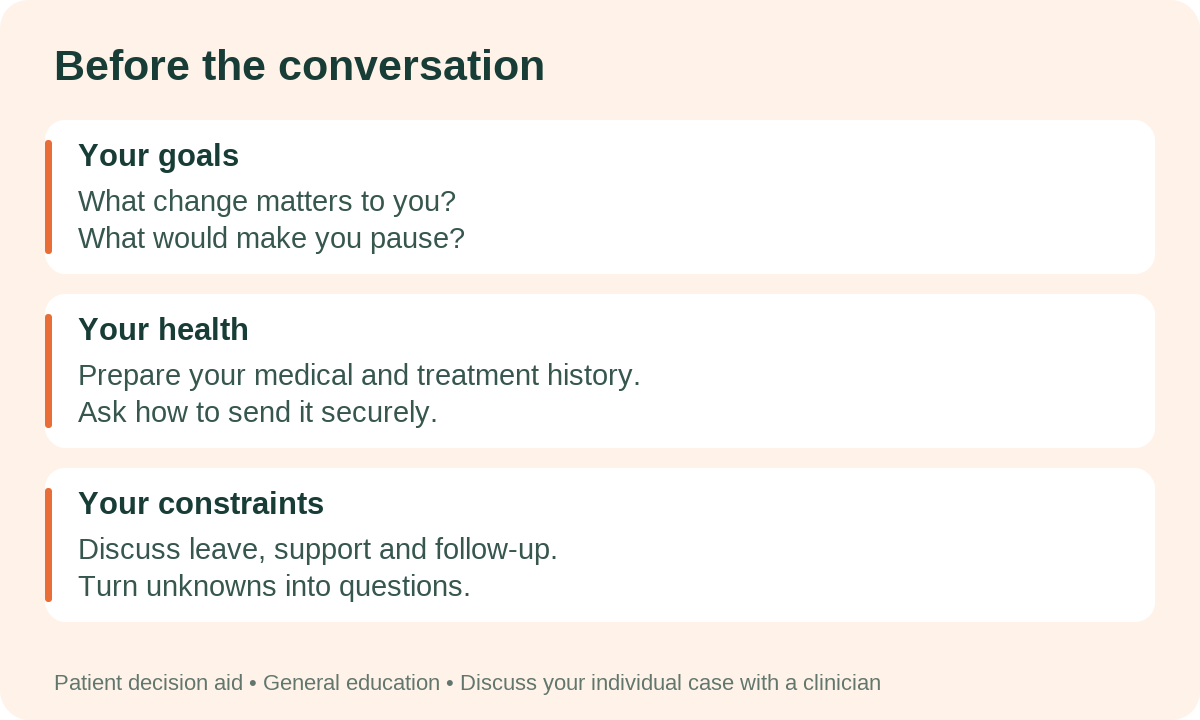
Decide what you want the conversation to answer
Start with the concern in your own words. For example, you might want to discuss fullness at the waist, how a particular area fits in clothing, or an uneven contour after previous treatment. You do not need to name a device or choose an operation before speaking with a surgeon. Write down your main priority and one or two secondary questions, so a long list of procedures does not distract from the reason you contacted the clinic.
Separate the change you hope for from the conditions under which you would consider treatment. Your limits might include available leave, help at home, willingness to accept scars, or a budget that must cover follow-up. These are conversation prompts, not a suitability test. Liposuction decisions are individualized; general health, skin characteristics, smoking or vaping, and expectations are among the considerations described by the American Society of Plastic Surgeons (ASPS).
Know whether you are speaking with a coordinator or a surgeon
An initial message may be answered by a coordinator who organizes appointments and quotations. That can be helpful, but establish when the operating surgeon will review your case and answer medical questions. Ask for the name of the person giving the opinion and whether the reply represents a clinician's assessment or administrative information. If you receive a translated answer, ask how follow-up questions will reach the surgeon and how you will confirm your understanding.
For surgery abroad, the NHS advises meeting the treating surgeon rather than relying only on sales discussions. Its guidance also emphasizes checking relevant training and being able to communicate clearly. Ask what the next appointment involves, whether it is remote or in person, and how much time you will have to consider the proposed operation. A polished messaging service is useful evidence about communication; it does not establish the quality of surgery.
Prepare a complete health summary
Make a readable list of medical conditions, allergies, previous operations and current treatments. Include prescription medicines, over-the-counter products, vitamins, supplements, and alcohol, tobacco or other substance use. Tell the team about earlier liposuction or other procedures in the area you want assessed. The ASPS consultation guidance identifies these subjects as part of preparing for an informed surgical discussion. Accuracy matters more than making yourself seem like an easy candidate.
For your own organization, keep names and dates together rather than sending a sequence of disconnected messages. If you cannot remember a procedure or medicine name, say that and ask what record would help. Tell the team when information is incomplete. Do not stop a prescribed medicine to match a generic preoperative checklist: request individualized instructions from the relevant clinicians. ASPS notes that preparation may involve testing, medical evaluation and medication changes; an online enquiry alone does not tell you which of those steps applies.
Ask how to share photos and records
Before sending sensitive images, confirm that the contact route belongs to the clinic and ask which photographs are actually required. Let the team specify the views, clothing and framing appropriate to your concern. Explain if you are uncomfortable sending a particular image and ask whether you can begin with a written description. Keep any agreed photographs clear and unedited so they do not unintentionally change the concern you want to discuss.
Ask who will see the files, how they will be stored, whether another service processes them, and how to request their deletion. Seek separate clarification about any proposed use in teaching, marketing or public before-and-after material. Do not assume that sending a consultation photo gives permission for every later use. These are practical privacy questions to put to the provider; this platform does not verify a clinic's information-security arrangements or collect your medical photographs.
What if the photo request makes you uncomfortable?
You can ask why a photograph is needed before deciding whether to send one. Try: “Which question will this view help the clinician answer? Who receives it first? Can I discuss this part of the assessment in person instead?” An answer such as “we need it for your file” leaves the clinical purpose unclear. A coordinator can explain how to transfer it, while a clinician can explain what they hope to learn and what the photograph cannot show.
A request for a private treatment-area photo and a request to display a before-and-after photo have different purposes. If the same form refers to assessment, education and marketing, ask the clinic to explain which use you are agreeing to and how to communicate a separate decision for each. Before opening a link, check the sending address against the clinic’s official contact. Ask how translated messages or images are handled when a coordinator or interpreter is involved. These questions help you choose whether the channel and audience are acceptable to you.
If the service needs a view you would prefer to share only in an examination room, say so. The clinic may be able to discuss general options or arrange an in-person examination while leaving an individualized proposal open. It is reasonable for a clinician to withhold a firm assessment if essential information is missing. You can still leave that exchange knowing what appointment to book, who will examine you and which decisions can wait until then.
General Medical Council guidance on photographs in remote consultations
Both legs hurt and bruise easily. Should I start with a contouring quote?
If both legs are tender, feel unusually heavy or bruise easily, describe those symptoms to a clinician where you live before submitting photographs for cosmetic liposuction. One possible explanation is lipoedema, also spelled lipedema. Other conditions can cause swelling, discomfort or a change in leg shape. A photograph showing that both thighs look similar cannot distinguish them. A quote priced by body area will not tell you which assessment you need.
At the appointment, describe what you notice during an ordinary day. Do your legs hurt when clothing presses on them? Does walking become uncomfortable? Is the change longstanding, and does it also involve your feet? Mention previous diagnoses and things you have tried. Avoid repeatedly pressing on your skin to create a bruise or trying to establish a diagnosis from where your socks leave marks. If you develop a new red, hot, painful, swollen leg and feel unwell, seek urgent local medical advice.
If a clinician recommends specialist assessment, ask for the suspected diagnosis and referral question in writing. If surgery is subsequently discussed, ask whether the service evaluates that condition, what other options apply, and who manages follow-up at home. A clinic describing cosmetic thigh contouring on its international site has not, on that basis alone, demonstrated a specialist lipoedema service.
Further reading: NHS guide to lipoedema
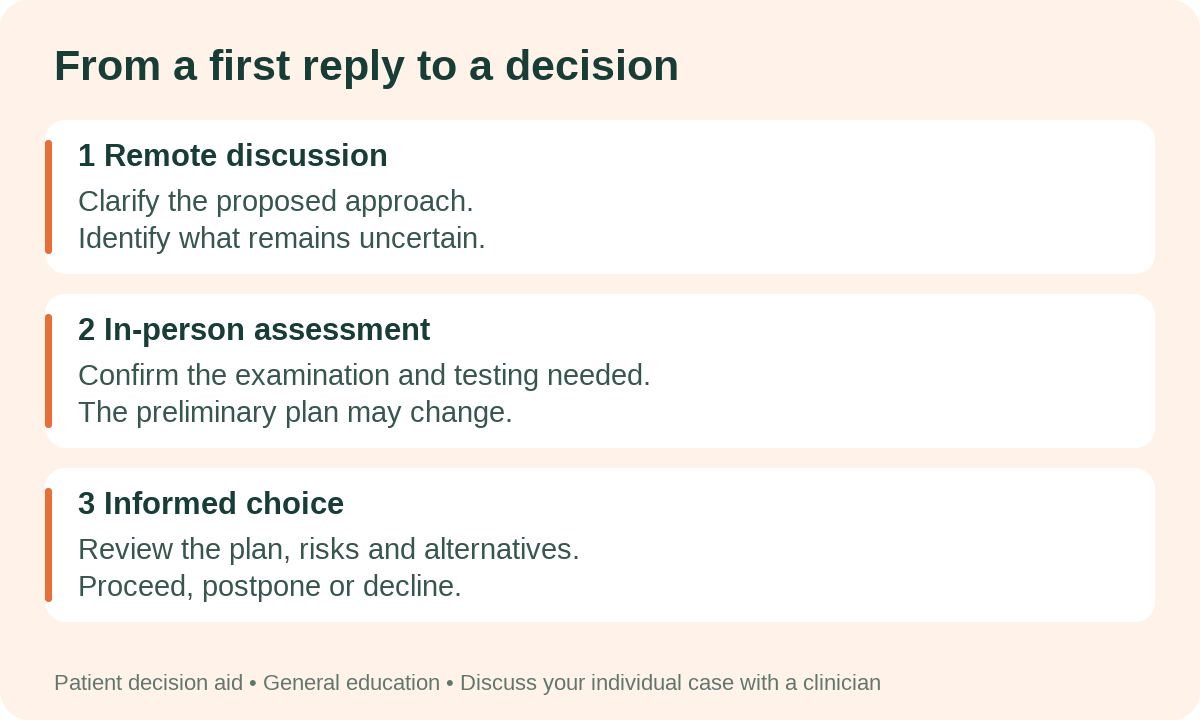
Turn a preliminary reply into specific questions
A response such as “you may be suitable for abdominal liposuction” is a starting point. Ask what the clinician thinks is contributing to the concern, which parts of that assessment remain uncertain, and which alternatives should be discussed. Request the treatment boundaries in plain language. If a package mentions the waist, flanks or a “360” approach, ask the clinic to mark the included areas rather than assuming that the same label has the same scope everywhere.
Discuss what liposuction can reasonably change and what it may leave unchanged. The NHS describes liposuction as a procedure to alter body shape, with outcomes influenced by factors including skin elasticity. A discussion focused on substantial weight loss, excess skin or another concern may lead to a different recommendation. Ask the surgeon to explain the option of no operation as well. You should be able to describe why the proposed treatment fits your own goal without repeating a marketing phrase.
Make the risk discussion personal
Ask which risks are especially relevant to your health and proposed treatment extent, rather than requesting a general assurance that the operation is safe. Liposuction can involve infection, fluid collections, contour irregularities, persistent sensation changes, anesthesia complications and blood clots; deeper injuries and cardiopulmonary complications are also possible. Energy-assisted methods can introduce heat-injury risks. The ASPS risks page provides a starting reference, while the treating surgeon must explain the implications for your plan.
Record the answer beside the proposed treatment, especially if more than one operation is suggested. Ask why combining procedures is appropriate, whether staging them is an alternative, and what would make the team change or cancel the plan. Request an explanation of who provides anesthesia, where surgery happens, and how urgent complications would be managed. Our safety guide offers a broader framework; here, the goal is to turn that framework into questions tied to the actual proposal.
Request a written plan you can compare
Make a simple comparison sheet for each clinic. Use the same headings: proposed areas, named clinician, setting, anesthesia, assessments still required, quotation inclusions, follow-up and unresolved questions. Leave a blank when the answer is missing. Do not fill it with an assumption from another clinic's package. This approach helps you see whether two quotations cover comparable work, even when one is much shorter or uses different terminology.
Ask the provider to distinguish the estimated price from items that may be determined after examination. Clarify charges for investigations, garments, medicines, extra reviews, changes in the procedure and management of complications. Request cancellation and refund terms before making a financial commitment. A lower headline figure cannot resolve uncertainty about the operation being offered. Use the platform's cost guide for quotation categories, then record the provider's answers in your own comparison.
Plan the handover before arranging travel
Discuss the proposed trip with your usual healthcare professional and ask how care will continue after returning home. The CDC's medical-tourism guidance emphasizes advance discussion, a complication plan and obtaining medical records for later clinicians. It also notes that surgery and air travel can both increase clot risk. Avoid treating a package's suggested departure date as individualized clearance to fly.
Ask what appointments are expected in Korea, who can reassess you if the plan changes, and which records will be available in a language you understand. Identify a contact for nonurgent questions and a separate route for urgent assessment. A remote reply may help coordinate care, but it should not become a reason to delay local help when you are unwell. Our travel guide covers the itinerary in more depth; this consultation is the time to identify the decisions that must precede booking it.
A listed clinic to consider for a focused discussion
TJ Plastic Surgery is a relevant starting point because its official body-contouring page lists liposuction and describes individualized planning. The page names Dr. Tack-Jin Chang in connection with those services and describes support for international-patient preparation. These are the clinic's published statements, not independent verification of outcomes, licensing or availability.
Use this specific service listing to ask who would assess your treatment area and whether a remote discussion with that clinician is available. Confirm the language arrangements, required records and what remains provisional before travel. You can review TJ's international website and request consultation information, or read the listed doctor profile first. The linked service information supports a focused consultation. A listing does not establish clinical superiority or suitability for your case.
Questions patients often ask
Can an online consultation confirm that surgery will go ahead?
Treat it as preliminary unless the treating team clearly explains otherwise. Ask which judgments require examination or testing, and what happens if the in-person assessment changes the plan. Before paying or traveling, you should understand the financial and scheduling consequences of a recommendation to defer treatment.
What if two clinics suggest different procedures?
Ask each clinician to explain the concern they are treating, the expected limitation and why an alternative was not selected. Compare those explanations against your original goal. If the difference remains unclear, another opinion or a pause may be more useful than choosing the proposal with the strongest promise.
How do I finish the consultation without committing?
Summarize what you understood, ask for corrections, and request the written information you still need. You can say that you will review the options before deciding. Keep the consultation checklist beside your notes, with unresolved questions clearly marked, rather than treating a completed enquiry as an obligation to book.