Before you leave the clinic: your liposuction garment fitting
If your surgeon prescribes a compression garment, arrange to be shown how it should fit before you leave. The garment, treated areas and length of wear belong to your own aftercare plan. A size chart or social-media recovery diary cannot tell you when to change the fit.
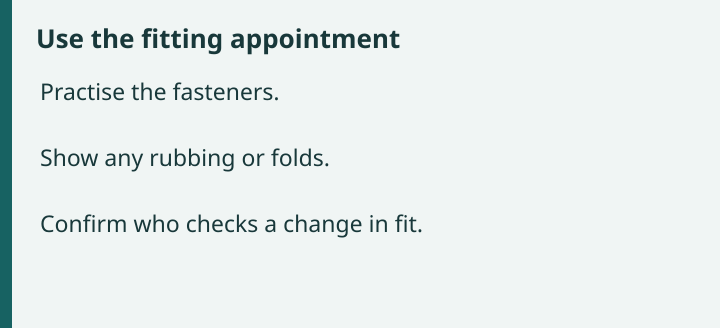
Bring your actual routine into the fitting
Tell the team whether you will be recovering alone, whether you can reach the fastening, and how you expect to manage laundry. Ask someone to demonstrate the closure and let you repeat it while they watch. Describe any mobility limits. If the garment rubs or catches a dressing, show the team the exact spot before going back to your accommodation.
Are my surgical garment and my clot-prevention stockings doing the same job?
An abdominal binder or compression garment is fitted to the area treated during liposuction. Your surgeon may recommend it for swelling and support. Anti-embolism stockings are fitted to the legs for a different purpose. A team may prescribe them to reduce the risk of a blood clot when you are less mobile. Wearing a garment that feels tight around your thighs does not tell you whether you have the clot-prevention plan you need.
If the discharge sheet simply says “wear compression,” lay each item on the bed and ask a team member to point to it. Write down its name, what it is for, how it should fit, when it can come off and who decides when you stop. Ask for instructions about bathing, washing and checking the skin for each item. If more than one item covers part of the same leg, have the team demonstrate the arrangement before you dress to leave. An extra layer or a tighter size is a change to the plan that deserves a fitting check.
Someone concerned about thrombosis on a long trip may be tempted to buy a similar-looking stocking online. Instead, give the surgical team your expected journey and usual mobility so it can review your individual prevention needs and travel timing. Ask which signs mean you need assessment, and who can check a persistent mark, pain or numbness after discharge. Keep the answers for the two items separate, particularly if different people will help you dress after you return home.
Further reading: ASPS guidance on liposuction recovery · NHS guide to anti-embolism stockings
Get the plan in writing
The International Society of Aesthetic Plastic Surgery describes compression as commonly used to help control swelling after liposuction. Ask when your own team wants it worn, who decides when to change sizes, and what to do while it is being washed. Clarify the plan for showering, dressings and sleep. A second garment may be practical, but first ask whether the clinic needs to fit it and whether it is included.
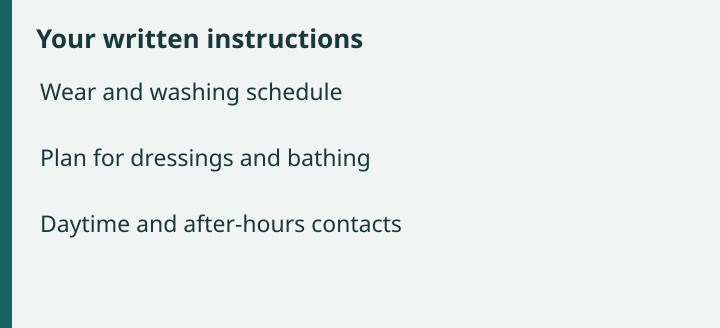
Know who will check a problem
If an edge rolls into a crease or you notice a new painful pressure point, ask how quickly the team wants to assess it. Record the after-hours contact and identify where you can receive an in-person review. A photo may help the team locate the problem but cannot tell them everything about sensation or the underlying tissues. Seek emergency care for sudden breathing difficulty or chest pain rather than waiting for a garment review.
Pack the information with the garment
Keep the brand, size, and any adjustments made at the clinic alongside the discharge instructions. Ask a travel companion to attend the demonstration if you wish and the clinic allows it. Before changing to shapewear or a stronger garment at home, discuss what you are trying to solve with the treating team. More pressure is not a measure of better healing.
Start before the operation
Add the garment to your list of practical questions while there is still time to plan. Is it supplied by the clinic, fitted there or purchased separately? Which areas is it intended to cover and what would make the team change the recommendation after surgery? If you already have a garment from a previous procedure, bring its details instead of assuming it will suit a new one. Ask whether the clinic wants you to buy anything in advance. You may prefer to wait for the actual fitting if the team cannot predict the product or size until it assesses you. Clarify whether a replacement or second garment would be priced separately.
What if elastic, rubber or dressings have caused a reaction?
Tell the clinic before ordering the garment if you have a diagnosed latex allergy or have reacted to a glove, elastic edge, adhesive or dressing. Describe the product, where it touched you, what happened and how quickly. A sore pressure mark, a delayed itchy rash and immediate hives are different histories. A clinician can use that information to decide which materials to check and whether you need assessment before surgery. You do not need to reproduce a past reaction to prove it.
A seller may describe the main fabric as cotton while the waistband, grip strip or fastener uses other materials. Ask the fitting team to check the complete product with its manufacturer, including any separate pads used underneath it. If latex allergy is confirmed, make sure the surgical and anesthesia teams know as well. Ask who will arrange a suitable alternative and confirm the fit while you are still in Seoul.
Keep the label or product name beside the clinic’s written instructions. If a reaction develops, contact the team for assessment rather than guessing whether the problem is pressure, an adhesive or latex. Difficulty breathing, swelling of the tongue or throat, or collapse after exposure needs emergency help immediately.
Cambridge University Hospitals information on latex allergy
The fitting is an opportunity to practise
Ask to be shown the front and back of the garment, the fastenings and the position it should have on the treated areas. If the plan permits you to remove it for specific tasks, practise putting it back on under supervision. Tell staff if you cannot see the lowest closures, reach the back or use your hands comfortably. They may be able to explain an adjustment or arrange help. Do not simply say “I understand” if what you mean is “I understand when someone else does it.” Tell the team which step you would struggle to repeat at your accommodation. It is easier to resolve that problem before discharge.
Explain what your accommodation is actually like
You may have a hotel room without laundry facilities, limited privacy if sharing or a shower that is difficult to use when sore. The clinic cannot infer those details from a travel date. Ask what the team recommends for cleaning and drying the particular garment and what to do during that interval. If staff suggest a second garment, confirm that the size, design and closures are suitable for your plan. A product bought online may look identical on screen while differing in cut or where it puts pressure. Have the clinic confirm alternatives rather than substituting a tighter item on the assumption that compression works better that way.
Ask for separate instructions for skin, dressings and garment
A single phrase such as “wear it until review” can leave several ordinary questions unanswered. When should a dressing be checked? Who removes or changes it? When may you shower, under what conditions and with whose help? When does the garment need to be in place, and when can it be removed? Ask for the answers in a language you can use while tired. If the instructions vary between areas of the body, have the team mark which advice goes with each area. Follow the clinical instructions given for your operation and contact the team if two pieces of advice seem to conflict.
What if the fit feels different the next day?
The fitting on the day you leave is a starting point. Ask how the team wants you to report a change and what information it needs. Instead of writing only “too tight,” describe the location, how long it has been happening, whether pain or altered sensation is new, and whether an edge or closure is involved. If you think the original fit has changed, ask who should assess it. Do not use a single measurement from another patient, a mark on the skin or an internet checklist to decide on a smaller size. The team may want to examine you, particularly if you also have new symptoms or a dressing problem.
When a photograph helps and when it falls short
A clear image sent through the clinic's preferred secure channel can show where a seam folds or a fastening sits. It cannot examine tenderness, skin temperature, circulation or deeper tissues. Ask the clinician whether a photo is appropriate before sharing one, and include a short description of how you feel and when the concern began. If the team requests an examination, arrange one locally or at the clinic as advised. If you feel acutely unwell, do not spend time trying to get a perfect photograph for a remote reviewer. After surgery, urgent symptoms such as new chest pain or difficulty breathing need prompt local emergency evaluation.
What to ask if you are travelling alone
Tell the clinic which tasks you can reasonably manage without another person. If your plan involves your arms, trunk or multiple areas, practise safely with staff before you rely on your ability to reach every fastening. Ask the clinic whether a supporter is expected for the first part of recovery and what arrangements are realistic if you have none. A hotel employee or driver cannot be assumed to provide personal care. If the recommended plan requires assistance that you cannot arrange, discuss the timing or suitability of the trip before committing. Finding this out early is much easier than discovering it after the procedure.
Use one page for the contact plan
Write the scheduled review date, the clinic’s ordinary number, its after-hours instructions and the location for an urgent assessment. Ask whom you should contact if a concern develops while the clinic is closed and how to act if you cannot get through. If you are about to return home, ask whether there is any reason for the team to check the fit or your recovery before departure. If new symptoms develop while you are abroad, seek care where you are according to urgency. Waiting for an answer in another time zone is not an emergency plan.
If a garment is marketed as a route to better results
Separate the surgeon’s instructions for your recovery from a product advertisement. Ask which problem the prescribed garment addresses in your case and how the clinician will assess whether to continue or change it. A claim about achieving a particular waist size, smoothing every irregularity or eliminating swelling is a different claim from using support during recovery. If you are considering new padding, a different closure, a “stage two” garment or ordinary fashion shapewear, show the team what the item is and explain why you are considering it. Do not add or alter components to imitate a photo from someone else’s recovery.
At your next review
Bring the actual garment, any instructions and the questions that arose in the course of daily life. It can be useful to note which tasks were difficult, when the garment shifted and whether you could follow cleaning and wearing instructions. The treating team can then judge whether the fit, product or advice needs changing. If a different garment is recommended, ask what changed and whether the older instructions still apply. If the recommendation is to stop, ask whether any other support or scheduled examination remains appropriate. Keep the date of the updated advice with your recovery notes so old instructions do not override newer ones.
Before buying a spare at home
Check the exact product details with the team and whether it wants to assess you first. A local retailer can explain its size chart and returns policy, but a retailer does not know your operation or the clinical reason for the prescribed fit. If you cannot obtain the same garment at home, ask the clinic what information it needs to evaluate a substitute or whether a local clinician should review your recovery first.
When instruction sheets disagree
Keep the most recent instructions from your treating clinician and clarify the difference with that team. Ask which advice applies to the specific garment and areas treated in your operation.
A listed clinic to consult
TJ Plastic Surgery. Its published body-contouring service includes targeted liposuction and planning across more than one area. If the team prescribes a garment, ask who will check its fit and whom to contact if it becomes uncomfortable. Read the clinic profile · Visit the international clinic website